Looiersgracht 60 – Amsterdam
Strangely familiar: Aldo Bakker’s aesthetic ambiguity
Essay by: Dr. Frits Scholten
Memories
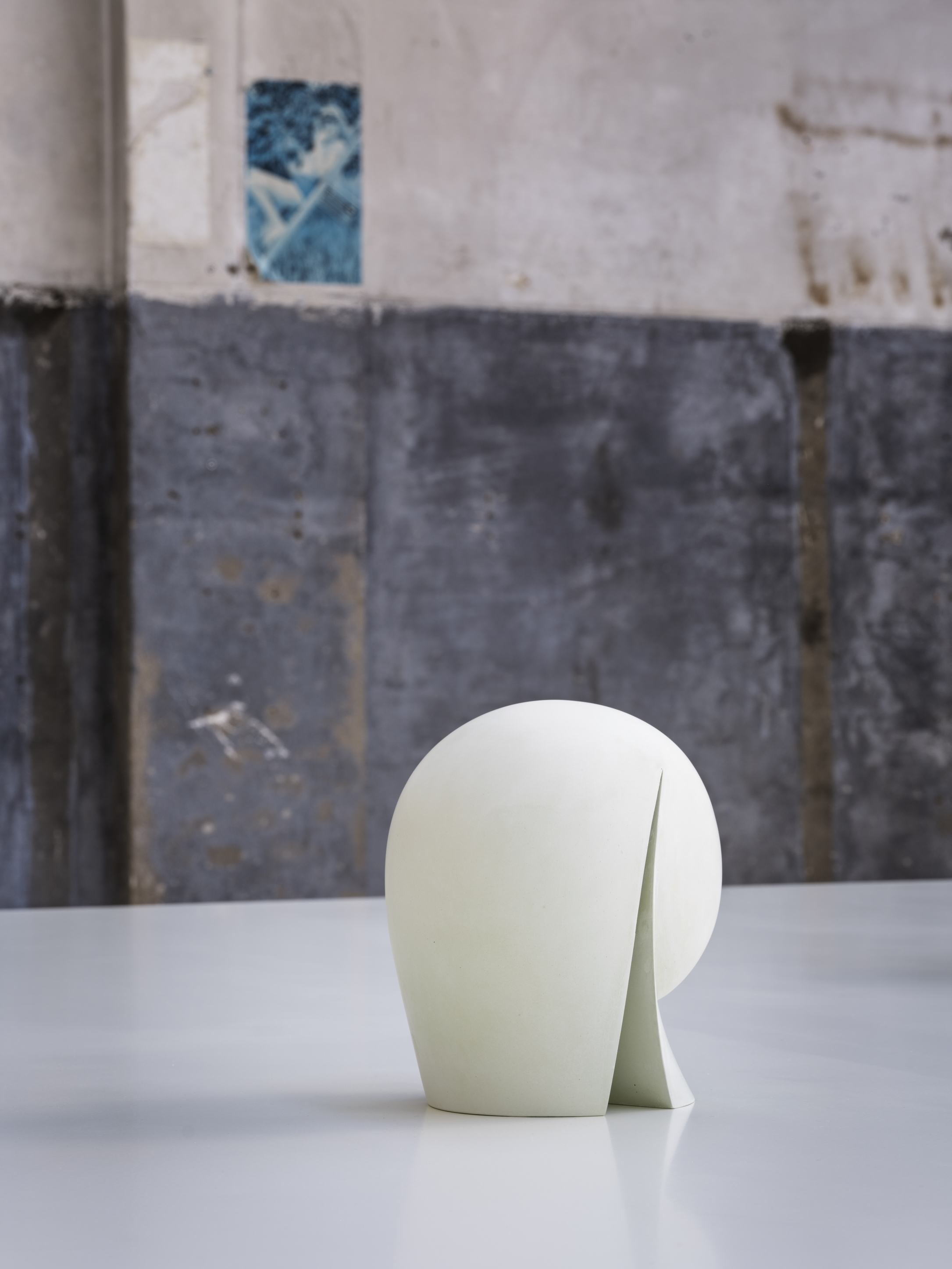
I still remember my first encounter with Aldo Bakker’s work very well, because it was such a profound, enchanting experience. It was around 2008, at a friend’s house in Utrecht, where he had a few pieces sitting rather casually on a shelf. The three white porcelain forms – Oil Platter, Water Carafe and Vinegar Flask – fascinated me immensely. Because they were so new and yet so familiar at the same time. It was an experience of beauty of the kind the American philosopher Alexander Nehamas associates with the promise of something valuable that an object can hold within it, even if we do not yet know exactly what that valuable thing is.[1] That bewildering combination of the new and the well-known is, in my view, characteristic of all the works that Aldo Bakker has conceived and created. A strange memory of the familiar, yet one that eludes you at once. Seen in this light, many of Bakker’s objects are distorted echoes of something that already exists and is known, yet at the same time without any direct precedent and therefore incomparable. They compel an experience of beauty and wonder, but also raise questions about form, function or autonomy. In that sense, Bakker is heir to the first modern sculptor, Constantin Brâncuși (1876-1957).
'Regardez mes sculptures jusqu'à ce que vous les voyez'
Around 1917, Brâncuși created his first Coupe, soon followed by three variations.[2] At first glance, the hemispherical form resembles a simple, everyday cup or bowl with a handle, but appearances can be deceiving. Just like the benches and stools the sculptor made for his own use, these Coupes roamed his Parisian studio-cum-showroom, where everything was constantly being moved around. On the surface, the Coupes appeared to be part of the domestic furnishings of Brâncuși’s working space, which further reinforced the association with real, functional cups. The sculptor’s reality, however, was quite different: the Coupes are sculptural objects, items that differ fundamentally from everyday drinking vessels due to their material (wood), solid form (no concavity), size (too large) and the absence of a flat base – characteristics that render them unusable as drinking vessels, but ideally suited as sculptures. Their hemispherical shape makes the Coupesunstable, causing them to lean, go their own way or wobble when touched. With his Coupe series, the sculptor created objects in which another object can be recognised – vaguely familiar – without actually being so. They belong to the earliest moments of modernism in which sculpture reversed its mimetic relationship with reality and appropriated a new category: that of the object.[3] An appropriation that, in its very nature, is imbued with aesthetic ambiguity, oscillating between utilitarian object and sculptural form: 'Look at my sculptures until you see them’ was, therefore, Brâncuși’s urgent advice to his visitors.[4]
Ambiguity
Ambiguity (ambiguitas) is a rhetorical concept dating back to classical Antiquity, which was initially coded pejoratively and was to be avoided. It was not until Baroque art that it acquired both a strategic and an aesthetic value for capturing the viewer’s attention. Since the 20th century, ambiguity and equivocality have been fundamental components of art.[5] This applies, however, primarily to painting and sculpture – in the world of decorative art and design, ambiguity is generally absent: after all, functionality takes precedence. This makes the observation that ambiguity also serves as an important underlying unifying force in Aldo Bakker’s body of work all the more surprising. While his designs from the early stages of his career still possess an evident and primary functionality – a glass, a bench, a jug, a cupboard – gradually the aspect of use as a design criterion was abandoned to make way for pure and new forms, in which ‘use’ is, at most, merely an ‘encore’.
Aldo Bakker’s aesthetic ambiguity
The ambiguous status of Bakker’s designs is explicitly fuelled by the titles he gives his works. Whilst naming the design of a functional object is a relatively recent phenomenon, undoubtedly stemming from an emancipatory drive to see design recognised as a fully-fledged art form, in Bakker’s case there is more to it. His titles frequently refer to the form of the object (Horn, Lips, Tongue) and sometimes make use of inventive puns: Three/Pair (2013), or AlinetoB (2014), Wait/Weight (2019) or Long Lasting (2019). Other titles, however, reveal a deeper and more guiding meaning, such as in Tonus (2010) and Pose (2011). The narrow bench Pose, for example, immediately raises the question of how comfortably one can sit on it. In that light, its name seems to announce what the user can expect: he or she is forced to strike a pose.
Often Bakker’s aesthetic ambiguity leads to disproportion, in terms of form, material and function: Pot(2015), made of pale yellow porcelain, appears at first glance to be a teapot, but the object has barely any more volume than its outline. Like AlinetoB, it is an easy victim of its own instability; even the slightest vibration could cause it to topple over and break. Works such as Horn (2014), Pitcher (2014) and Moustache (2021) are made of highly polished metal, where every touch immediately leaves fingerprints on the merciless surface. ‘Touch at your own risk’ seems to be the message here. This also applies to the various works that Bakker had finished in urushi, which have consequently acquired a certain unapproachable quality.
Bakker often consciously seeks what he calls the ‘zero point’, the moment where a contour line vanishes into nothingness or where two forms touch only minimally. One example is Horn, where the circular, horn-shaped spout rests on the wafer-thin rim of the oval jug’s body at a single point. The result of this deliberately created ambiguity is doubt, which challenges or intrigues the user: is it even possible to pour from Horn without the spout detaching from the body? Fortunately, the reality is quite different: the liquid flows neatly towards the spout’s outlet along the imaginary line via the zero point. Moreover, topping up Horn along the curved back of the spout creates a small ‘waterfall’ as an added sensation.
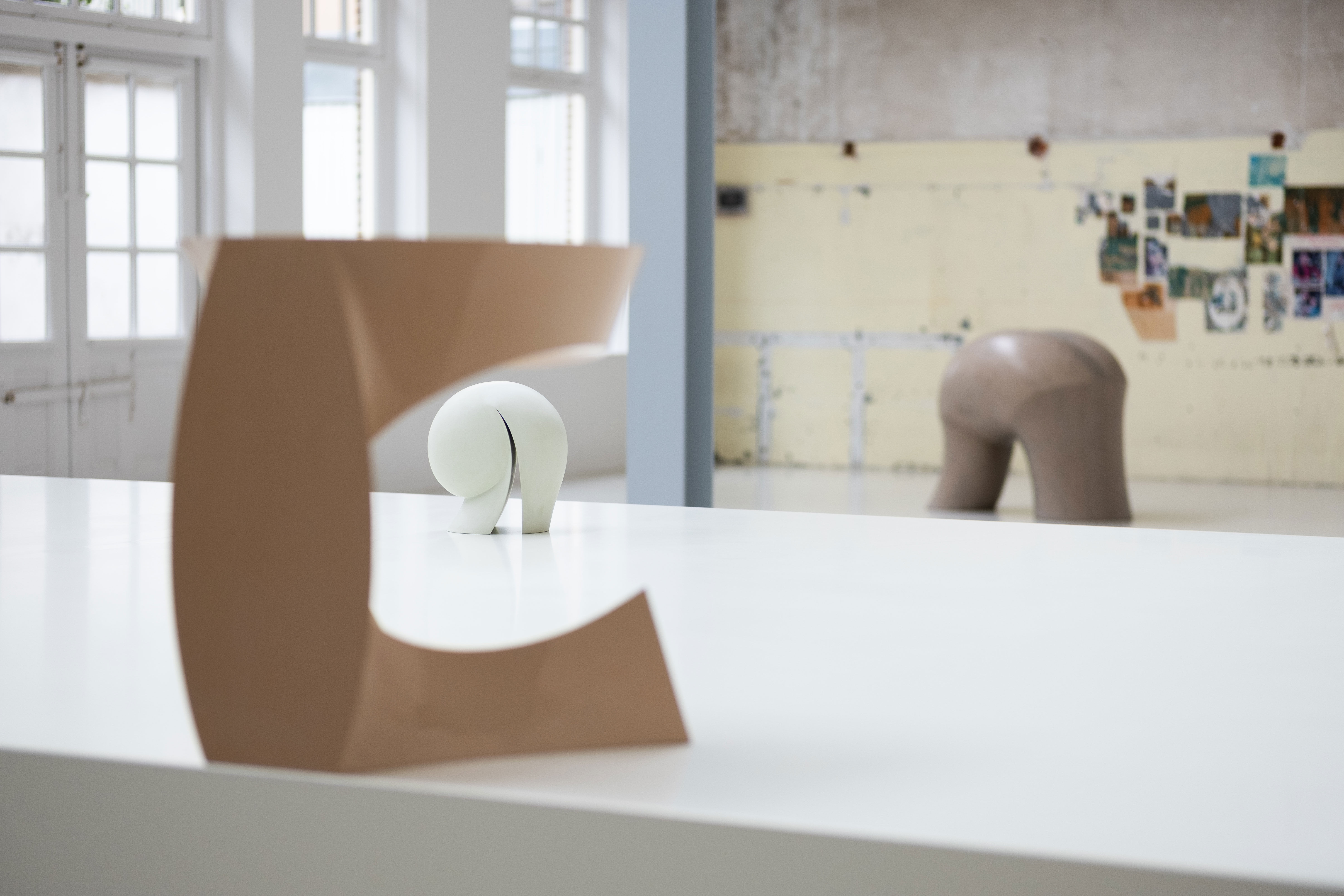
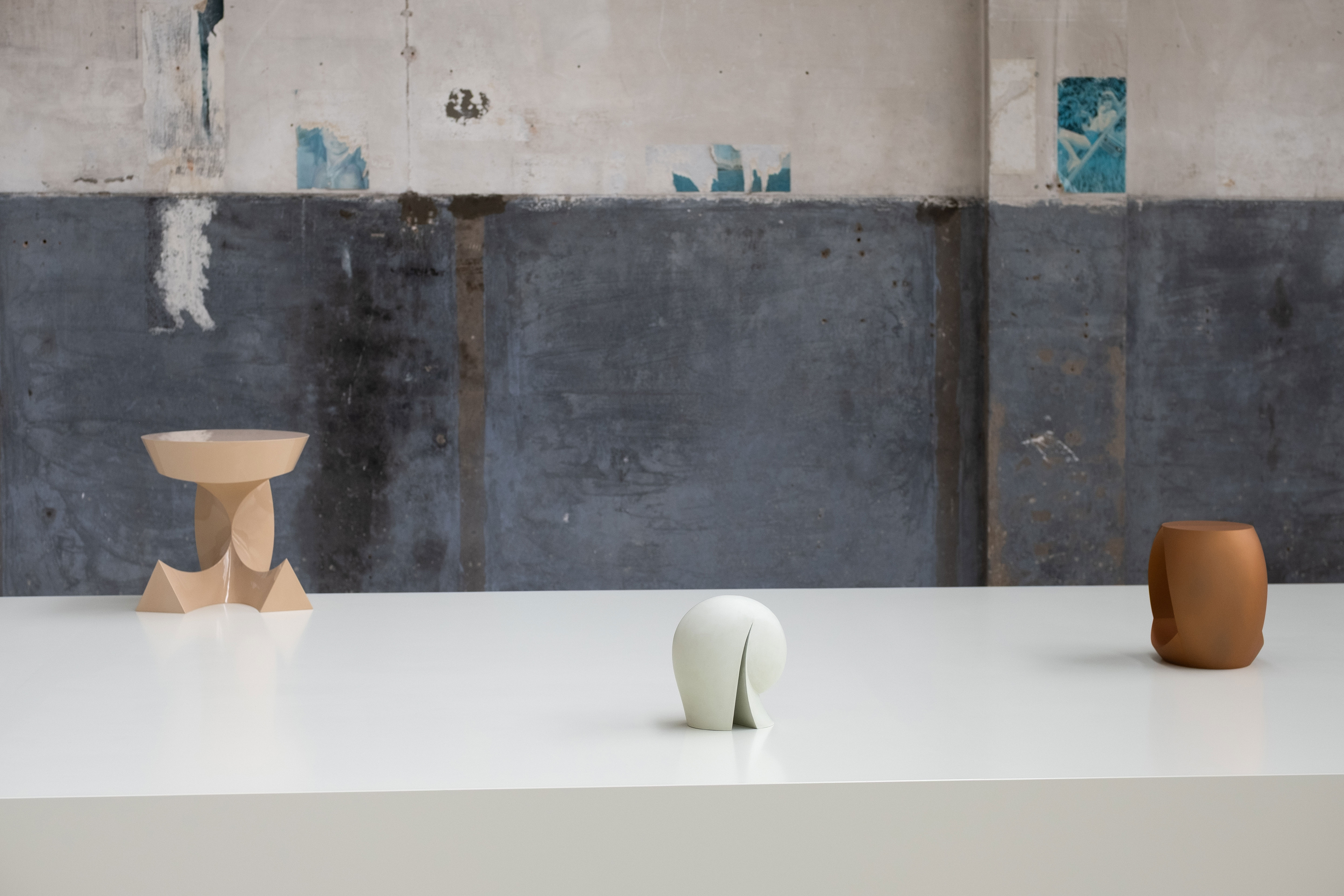
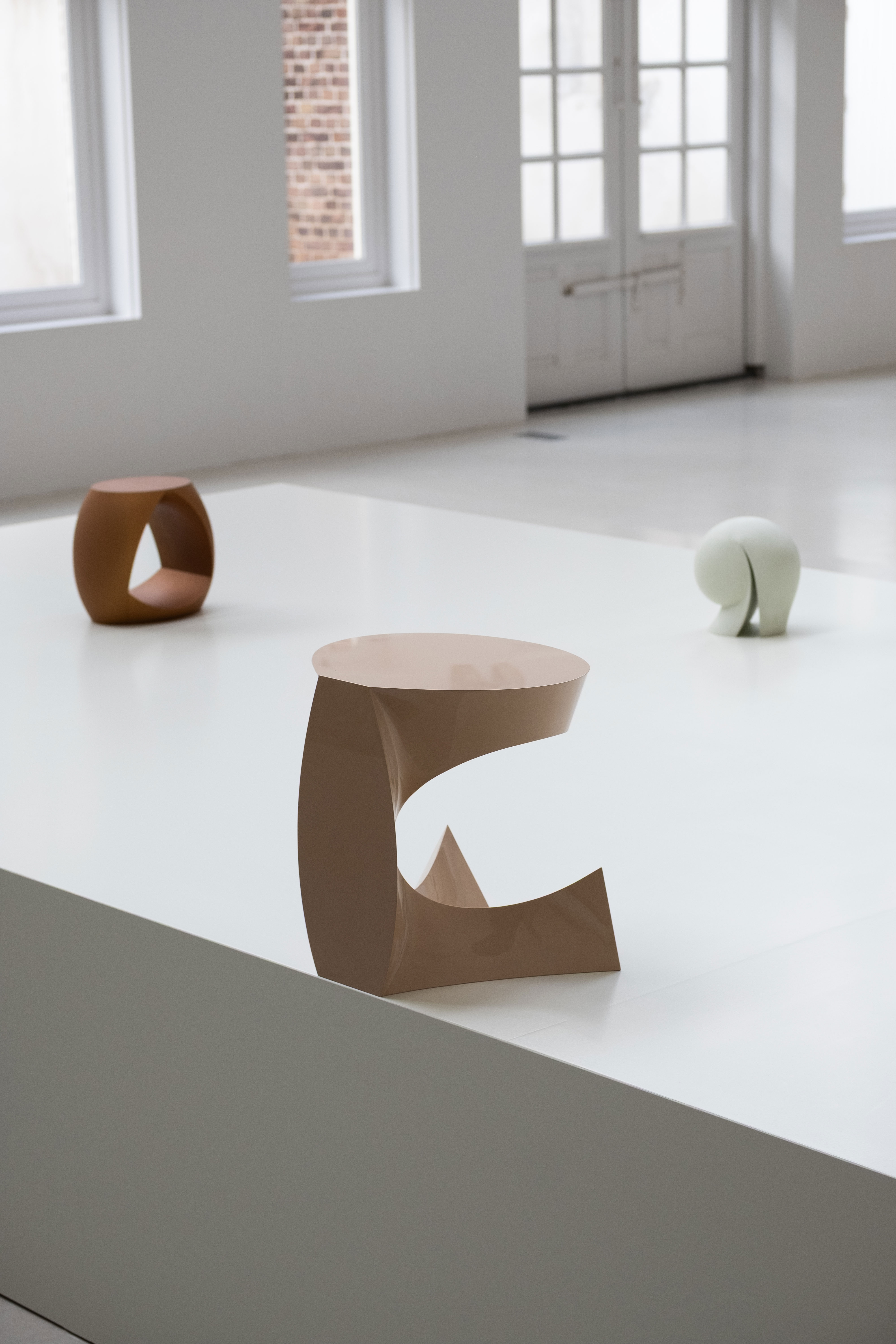
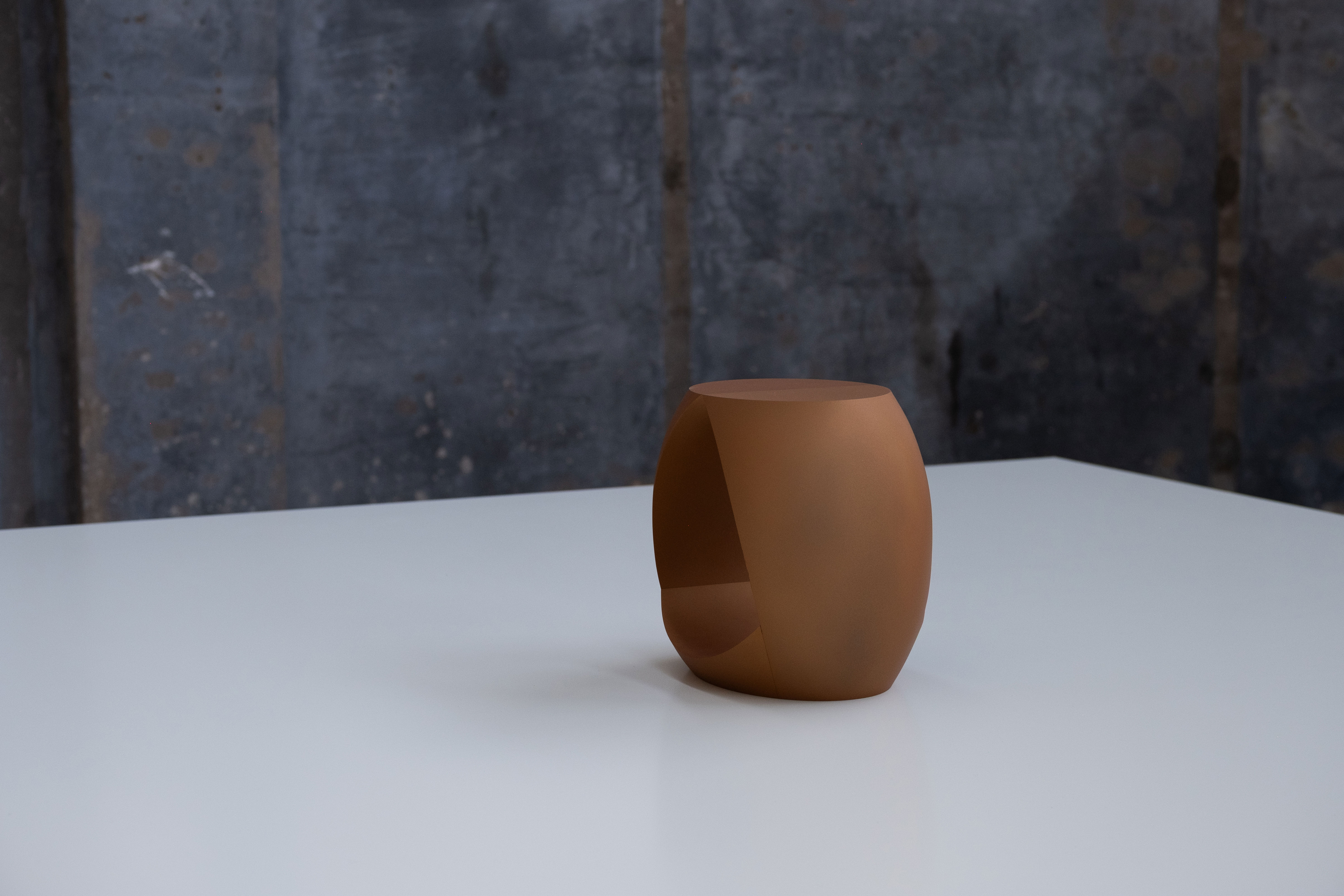
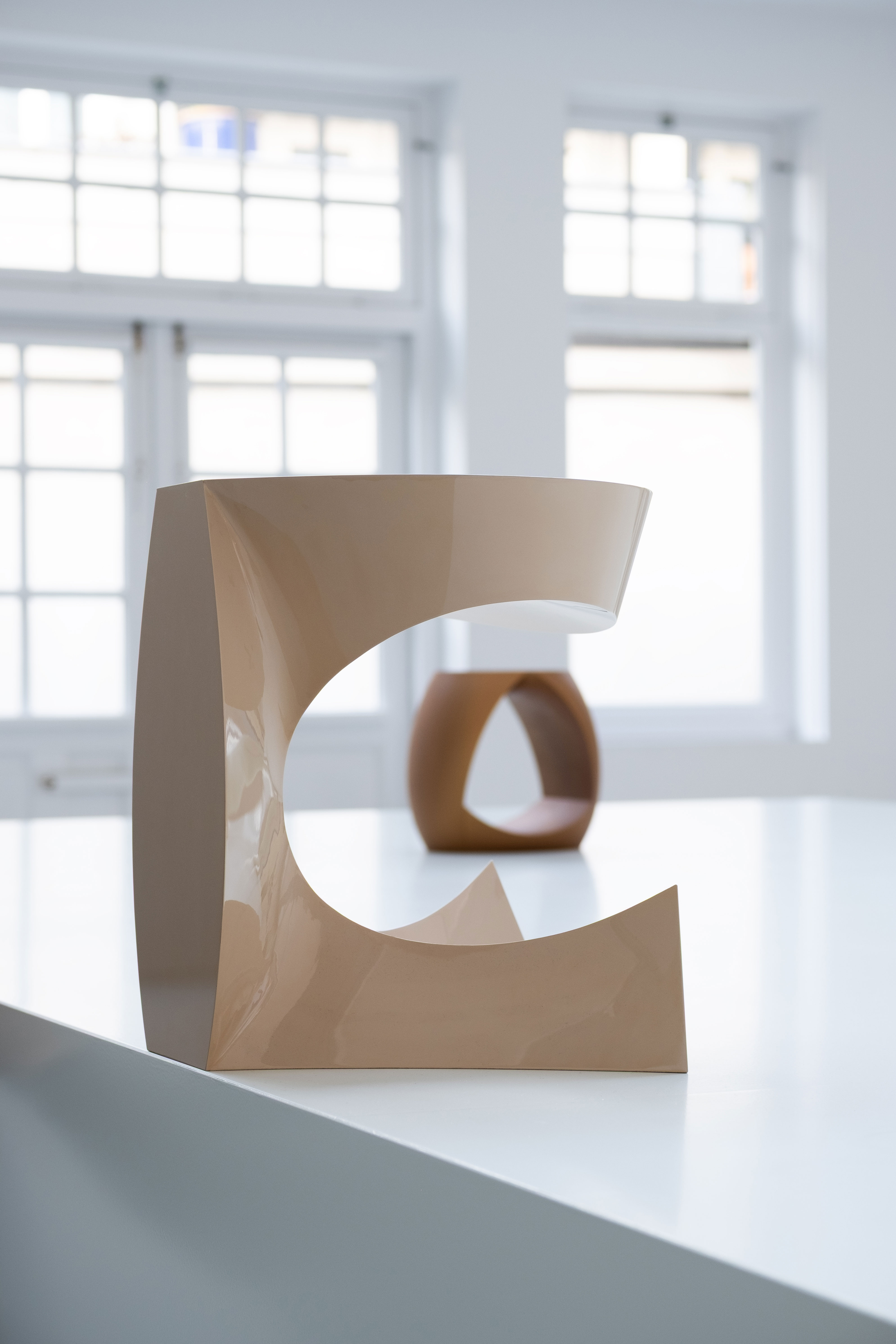
A more recent example is Sitting Table (2019), a hybrid object, as its paradoxical title suggests. Its ‘free-hanging’ seat does not immediately invite you to sit on it (won’t it break?), and the high-gloss beige urushifinish makes you think twice about placing anything on it. Or should we not view this ‘table’ as a piece of furniture, but as an autonomous sculpture? Or perhaps even as both? Could it be that the word ‘sitting’ in the title does not refer to the active way it is used, but to the fact that the ‘table’ itself sits passively, with its legs protruding forwards? Bakker explored that sitting quality further in Sitting Table, Stack (2022), consisting of three stone versions of Sitting Table stacked on top of one another and decreasing in size: one ‘table’ is literally placed on top of another, and the overall form resulting from this stacking is, in fact, a sculpture. The association of this archetypal sculptural act – stacking – with Brâncuși’s working practice is inevitable. Not only because of the monotonous stacking of his Colonne sans fin (1918), but above all because of the many stacked heterogeneous elements, through which the sculptor broke with the traditional pedestal-sculpture relationship. For instance, around 1917, Brâncuși placed Coupe II on a prototype of Colonne sans fin, thereby transforming this initially autonomous, zigzagging form into a pedestal and apparently turning Coupe II from a sculptural object into a ‘conventional’ sculpture on a 'plinth'.[6]
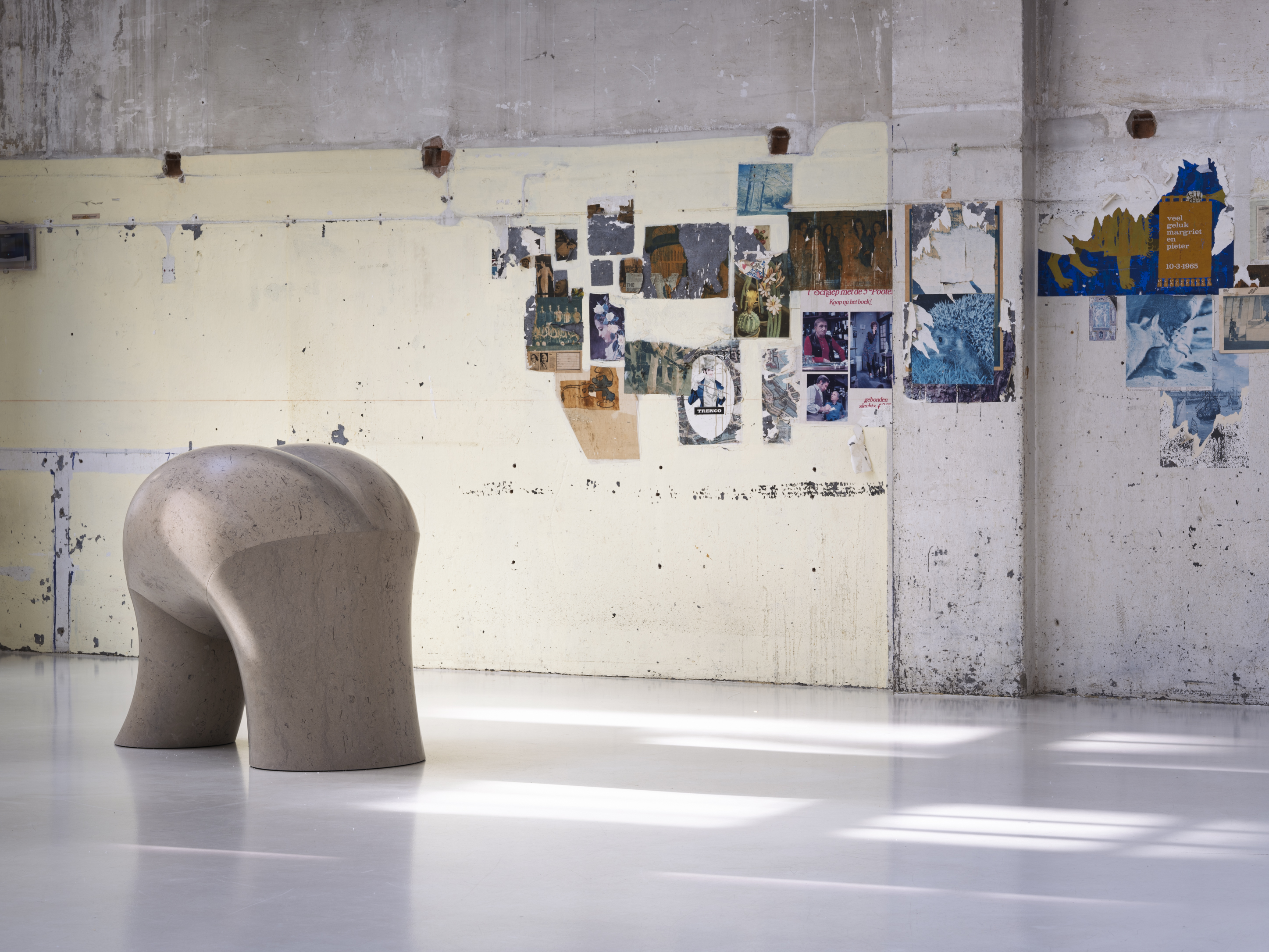
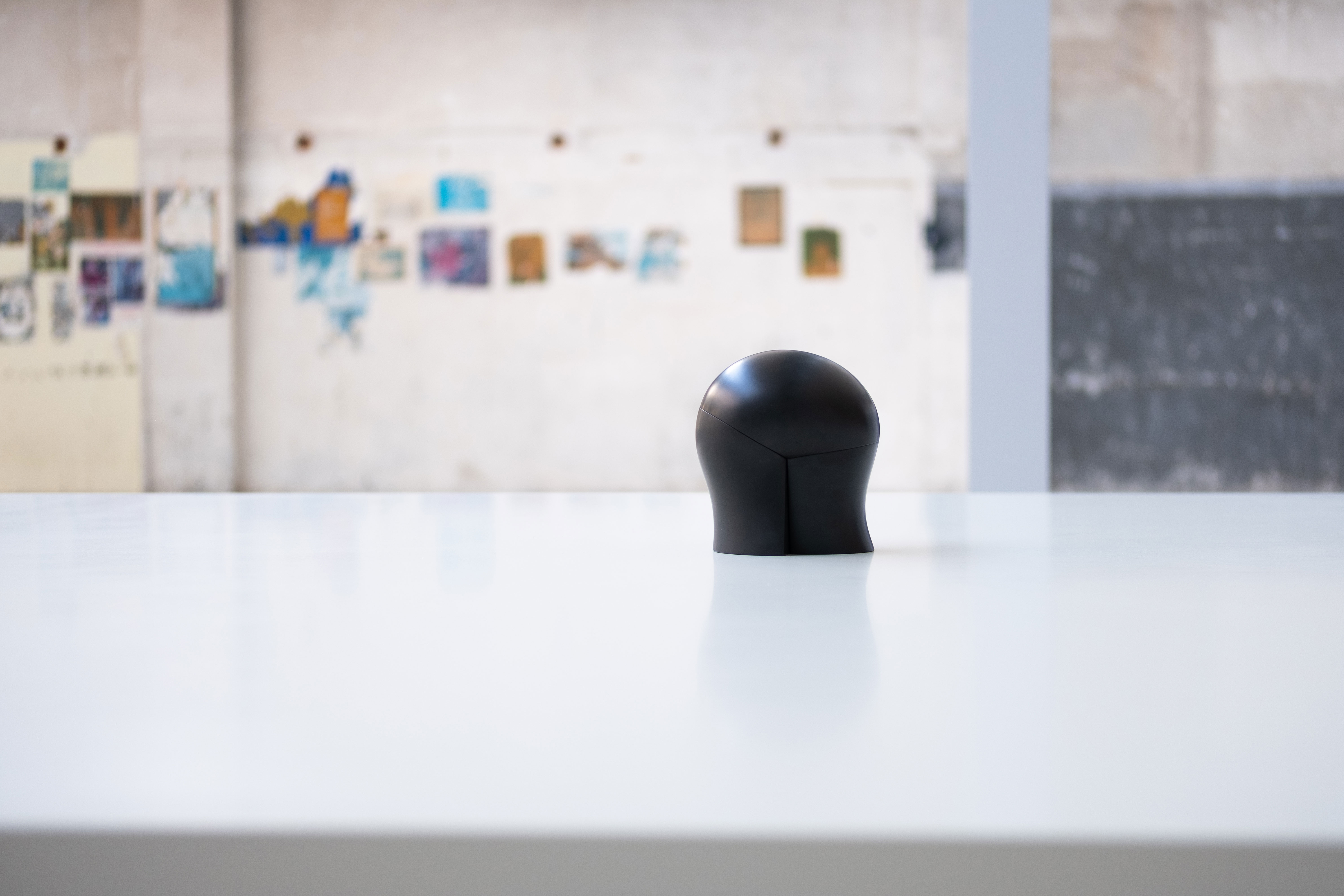
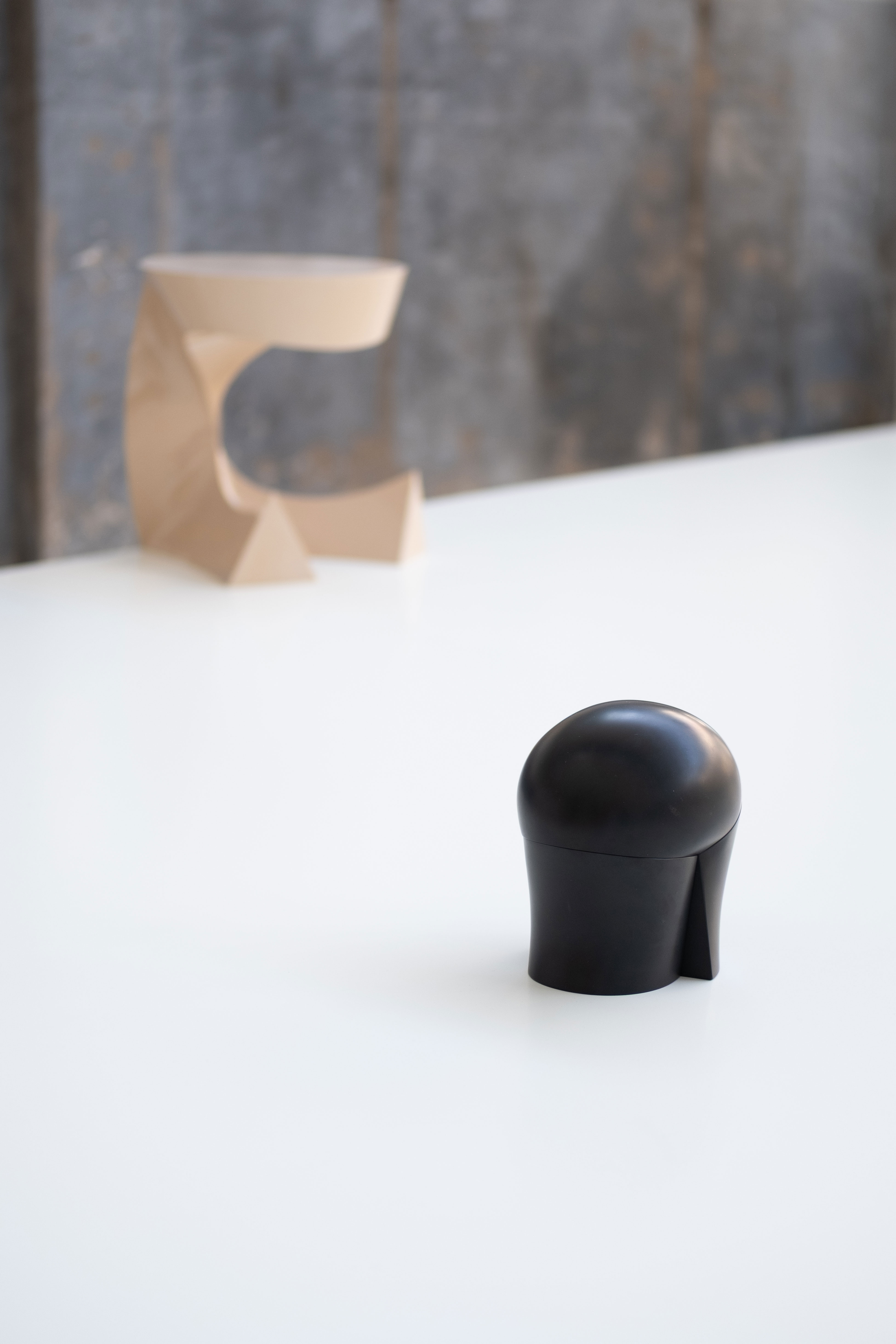
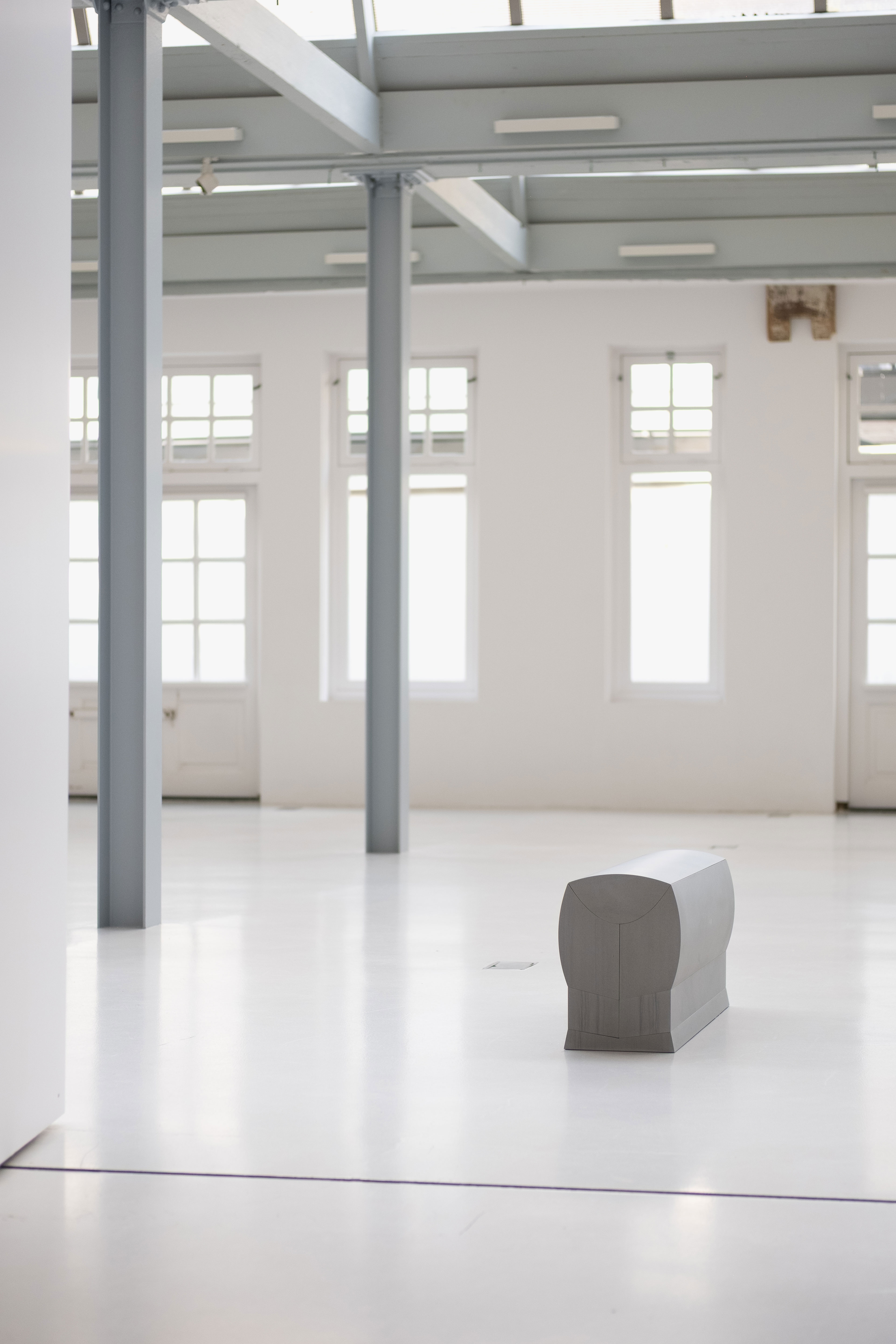
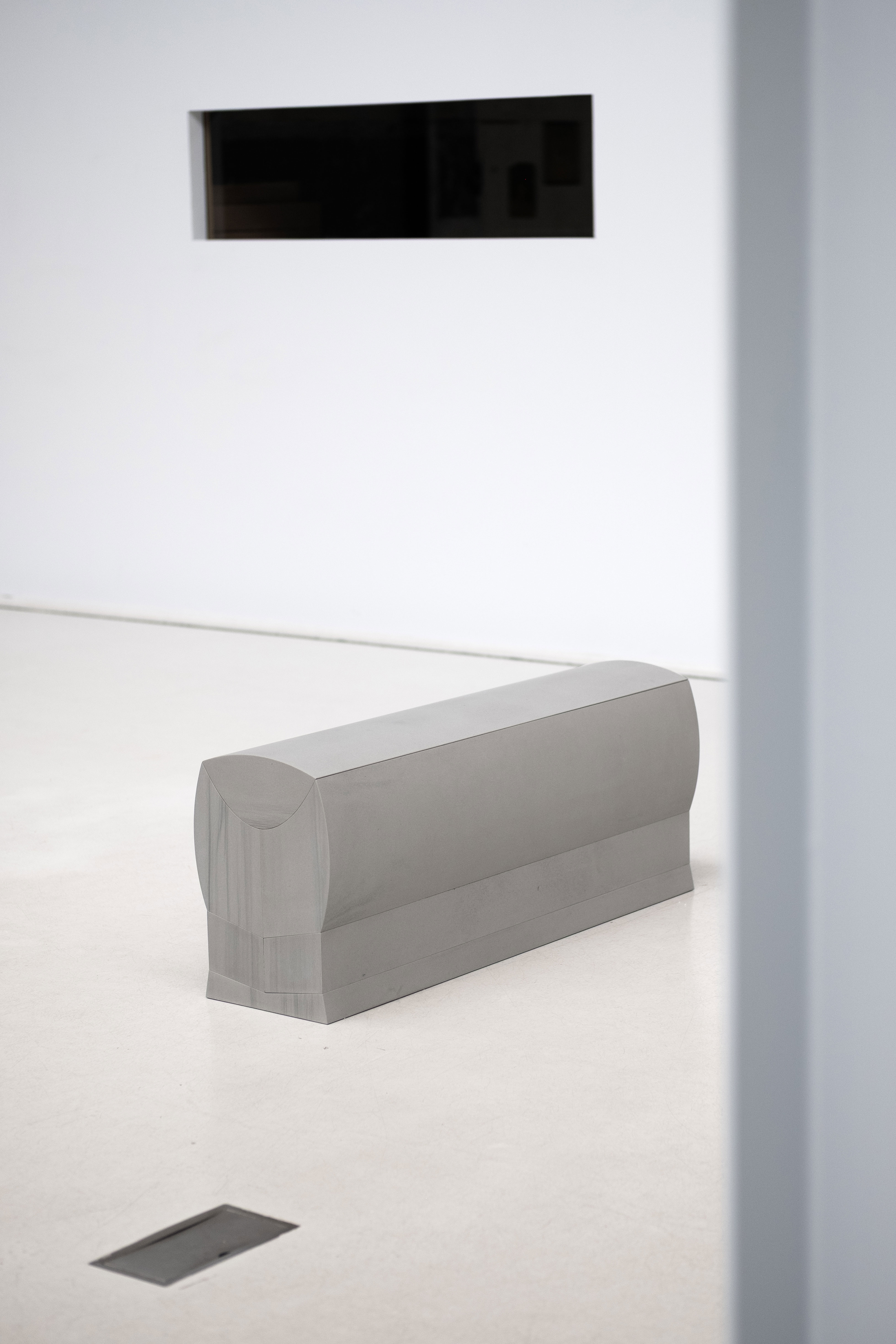
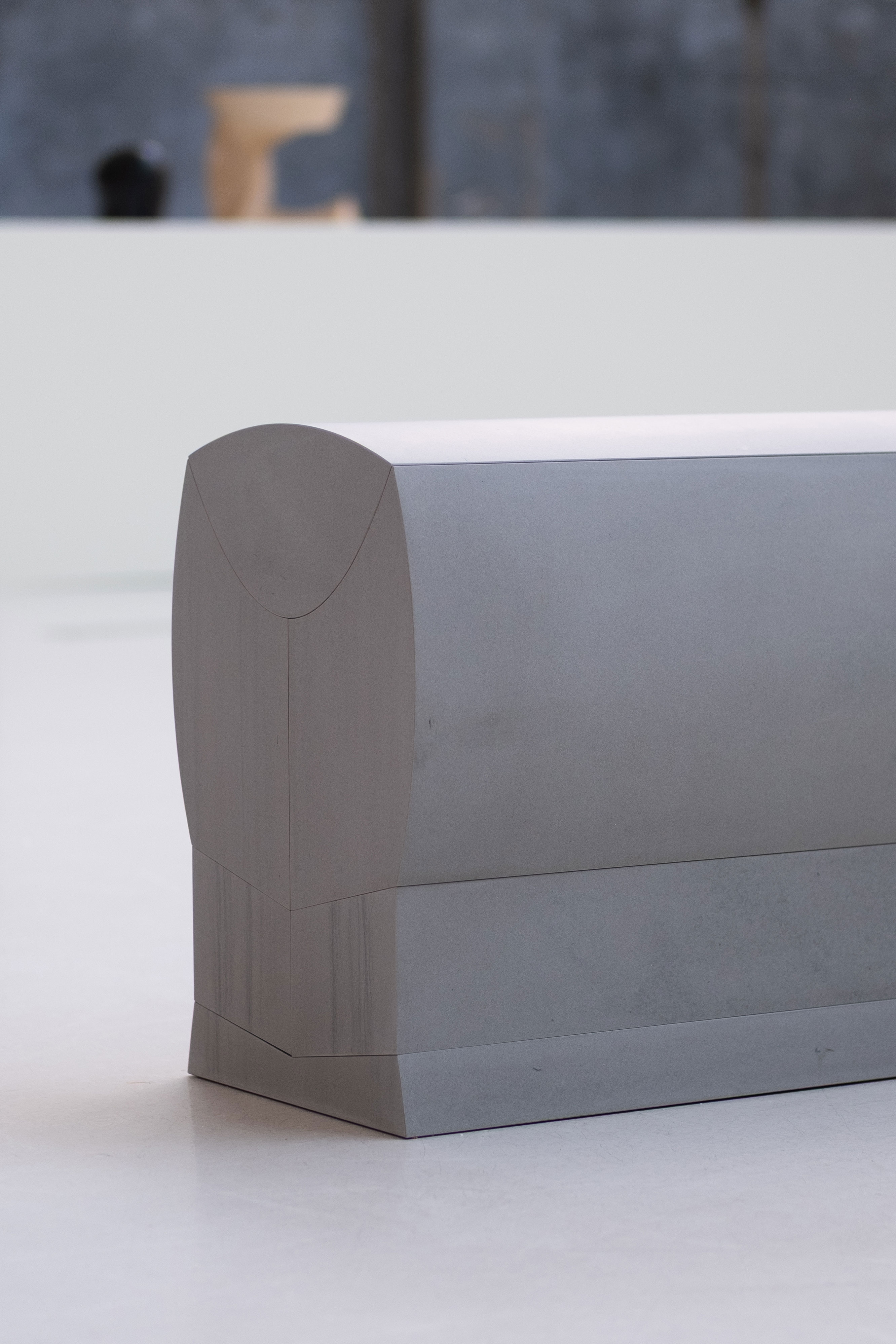
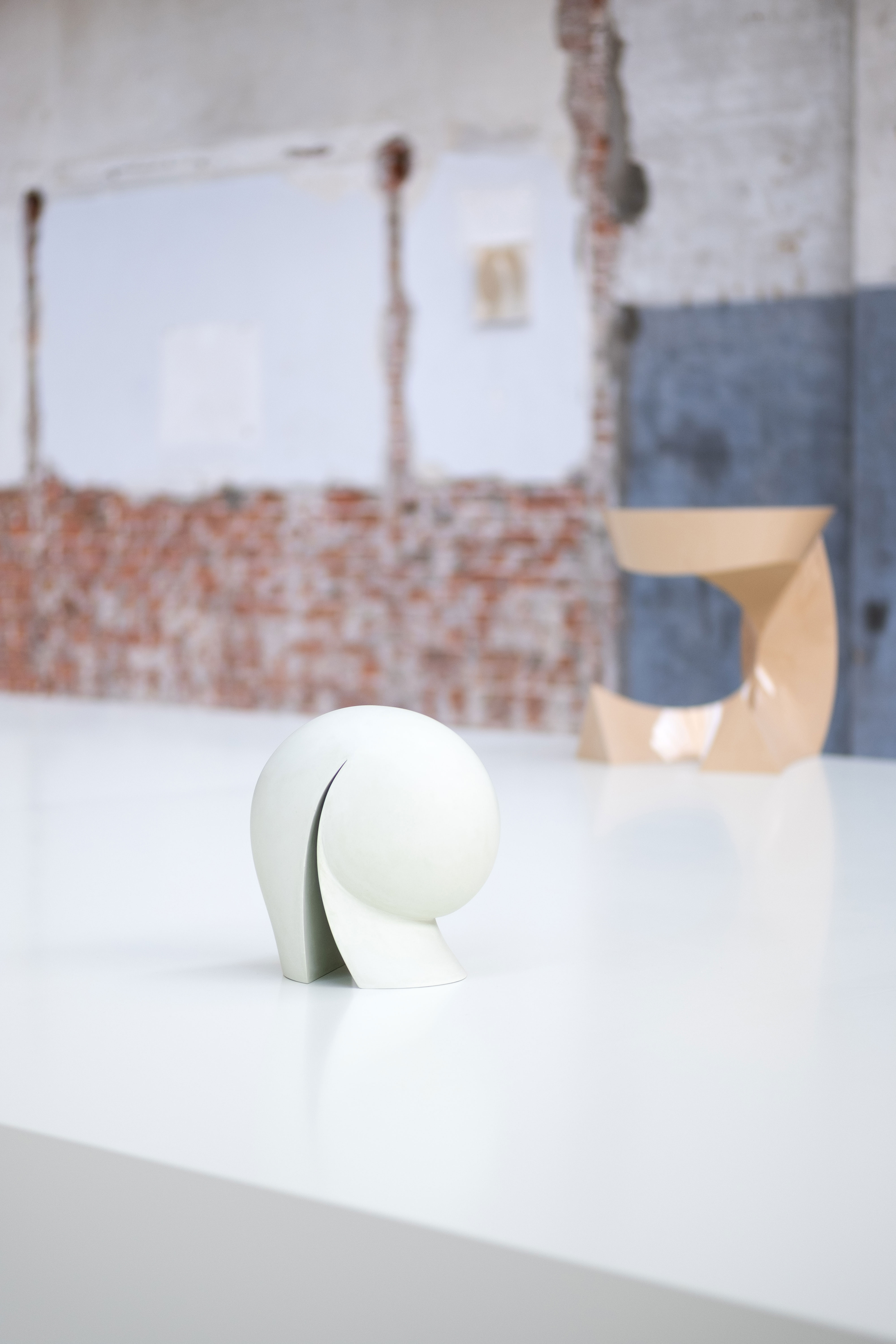
Incidentally, Aldo Bakker’s Sitting Table, Stack can also be unstacked. The three separate elements can then be placed freely within the room as a small family of forms. It is an option that provides the user of the work freedom of interaction and invites a certain, almost childlike playfulness. Bakker also incorporated such an element of play into Triad (2026), consequently adding another layer of equivocality. The Belge noirbiomorphic form – ‘vaguely familiar’ to a small elephant – is ostensibly a sculptural object, carved in a conventional sculptural medium. In reality, however, Triad turns out to consist of three elements that fit together almost seamlessly, forming a closed, matt-black sculptural unit, held together by a sophisticated distribution of weight and a perfect fit. This tripartite structure is a feature the design shares with Three Pair (2013). Only upon handling it – something to which Triad’s tactile form and modest size invite (in contrast to the much larger Three Pair) – will the viewer discover that the unity is merely an illusion and that this enigmatic object is in fact a trinity. This lends this three-dimensional puzzle a ‘non-functional’ functionality.
Due to their ambiguity and almost autonomous sculptural qualities, Sitting Table and Triad tie in with four of Bakker’s designs from 2010 onwards: Tonus (2010), the aforementioned Three Pair, Wait/Weight and B (both from 2019). The first of these, Tonus, even marks an decisive break with all his previous works. It is a fluidly curved, organic form that rises from a broad base and ends in a narrow, tongue-shaped foot. Although Tonus was initially developed as a pure form with no functional purpose in mind, its curved shape proved well-suited to sitting on, suggesting the object could also be used as a stool. It is an object in which a potential function merges with its autonomous form in an almost intuitive manner. At the same time, Tonus looks anything but stable and even suggests a slow, snail-like movement, to which the title also alludes: the invisible tension of muscles. Suggested movement and potential instability, the use of wood, marble or bronze, and the fact that the design was also produced in smaller sizes, are all characteristics that situate Tonus outside the realm of ‘design’ and comfortably place it into the world of sculpture. A similar sculptural ambiguity also characterises Three Pair, Wait/Weight and B. Moreover, with the latter work, Bakker introduced a new element: enlargement, to explore the effect of scale on the design. In Ring Table (2022), a change in scale led to a change in function: from a ring to a bracelet, a side table and finally a console; however, the monumental version of B – reaching chest height of an adult – immediately transforms the design into an autonomous, space-dominating sculptural form. Its size was determined by the criterion that a child should still be challenged to climb onto it and sit on it.
B emphasises what Aldo Bakker has always maintained: that the title ‘designer’ does not apply to him. He is an inventor of forms (‘vormgever’ in his mother tongue) or, more simply, an artist. Gradually, with his equivocal forms – object-sculptures, sculptural objects, or perhaps even prototypes, still searching for their definitive functional destination and meaning? – he has entered the territory of sculptors. While ambiguity made its debut in sculpture with Brâncuși over a century ago, the phenomenon remains still rather unexplored in the world of design and applied art. It makes Aldo Bakker a solitary pioneer, a ‘marginal figure’, working on the fringes of the field. But isn't precisely there, on the periphery, that the most important experiments and innovations take place and where freedom is at its greatest?[7]
Frits Scholten
[1] Alexander Nemahas, Only a promise of happiness. The place of beauty in the world of art, Princeton & Oxford 2017, pp. 75, 76.
[2] Ariane Coulondre (ed.), Brancusi, Paris 2024, p. 170.
[3] Penelope Curtis, Sculpture 1900-1945. After Rodin, Oxford 1999, pp. 141-146.
[4] Denis Alkan, ‘Sculpter: notes à partir de Brancusi’, Communications 34 (1981), pp. 159-166, spec. p. 161.
[5] Verena Krieger, ‘Modes of aethetic ambiguity in contemporary art’, in Frauke Berndt & Lutz Koepnick (eds.), Ambiguity in contemporary art and theory, Hamburg 2018, pp. 59-103.
[6] Oliver Wick (ed.), Brancusi Serra. A handbook of possibilities, Ostfildern 2011, pp. 60-73, and spec. figs. 38, 39.
[7] Tijs Goldschmidt, Darwin's Dreampond, Cambridge (MA) 1996.
2026
Erik & Petra Hesmerg / Tijmen Smeulders